DOI
https://doi.org/10.47689/2181-1415-vol1-iss1-pp256-271Keywords
mutation , adaptation , evolution , genetic transformation , globalization , vaccinationAbstract
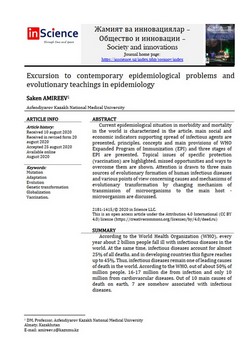
Current epidemiological situation in morbidity and mortality in the world is characterized in the article, main social and economic indicators supporting spread of infectious agents are presented, principles, concepts and main provisions of WHO Expanded Program of Immunization (EPI) and three stages of EPI are presented. Topical issues of specific protection (vaccination) are highlighted, missed opportunities and ways to overcome them are shown. Attention is drawn to three main sources of evolutionary formation of human infectious diseases and various points of view concerning causes and mechanisms of evolutionary transformation by changing mechanism of transmission of microorganisms to the main host - microorganism are discussed.
SUMMARY
According to the World Health Organization (WHO), every year about 2 billion people fall ill with infectious diseases in the world. At the same time, infectious diseases account for almost 25% of all deaths, and in developing countries this figure reaches up to 45%. Thus, infectious diseases remain one of leading causes of death in the world. According to the WHO, out of about 50% of million people, 16-17 million die from infection and only 10 million from cardiovascular diseases. Out of 10 main causes of death on earth, 7 are somehow associated with infectious diseases.
Downloads
Downloads
275 249Published
How to Cite
Issue
Section
License
Copyright (c) 2020 Saken Amireev

This work is licensed under a Creative Commons Attribution 4.0 International License.